



Image: Anthea Earth 24 x 48 Large-Format Porcelain Dining Room Floor Tile and Classic Limestone Combed 12 x 24 Wall Tile from Arizona Tile
The dining room often sits at a crossroads in the home. It connects to the kitchen, opens into living areas, and hosts everything from everyday meals to holiday gatherings. Because of that, the dining room layout benefits from materials that feel intentional, durable, and visually connected to the rest of the space. Tile plays a quiet but important role in a dining room, grounding the space while letting furniture, lighting, and décor take center stage.
Whether you’re renovating an existing dining room layout or designing a whole new space, thoughtful floor and wall selections can help define how the room functions and how it feels. For visual inspiration across a range of styles, explore our curated dining room gallery, which highlights how surface choices shape dining room layouts in both open and defined spaces.
Floor Design That Supports the Dining Room Layout
The dining room floor literally sets the foundation for the entire space. It influences how the room feels, how furniture is arranged, and how seamlessly the dining area connects to nearby rooms. In many dining room layouts, the floor also acts as a visual bridge between the kitchen and the surrounding living spaces.
Creating Flow with Neutral Surfaces
Neutral, stone-inspired floor designs are a popular choice for dining room floor tile ideas because they provide flexibility. Soft tones and subtle movement allow the dining table, chairs, and lighting to stand out without competing for attention. This approach works especially well in open dining room layouts, where visual continuity helps the space feel cohesive rather than segmented.
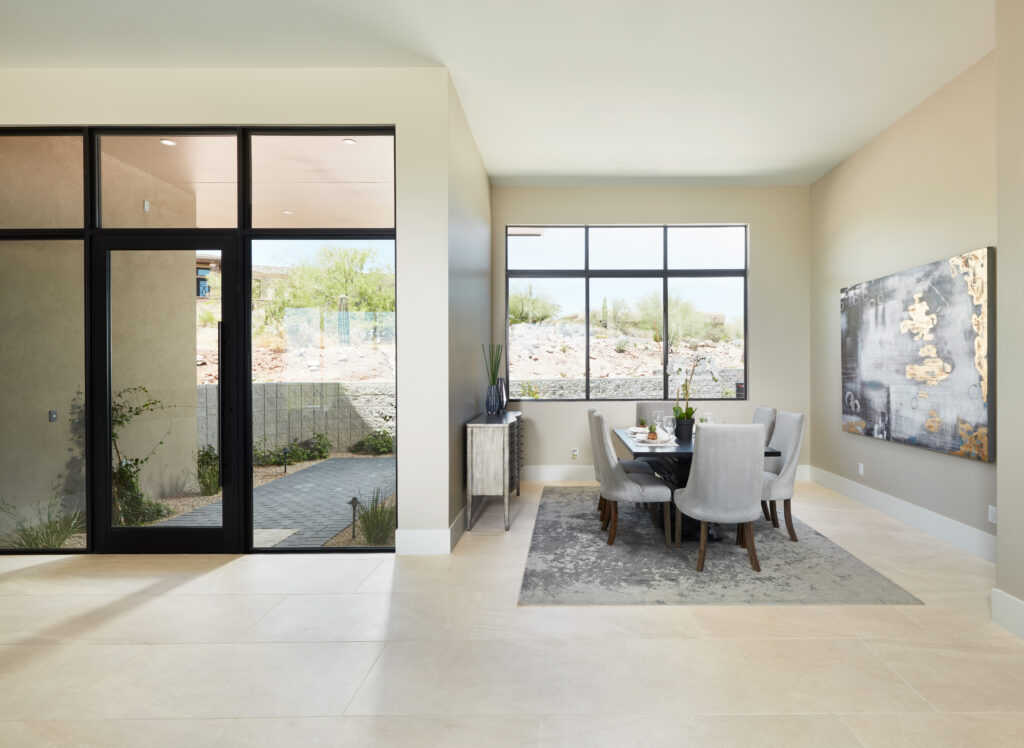
Image: Pietra Italia Beige 24 x 48 Large-Format Porcelain Dining Room Floor Tile from Arizona Tile
Larger-format floor designs further support this sense of flow. Fewer grout lines create a cleaner look, helping the dining room layout feel more expansive and refined. This is particularly effective in smaller dining rooms, where simplicity can visually open up the space.
Designing for Daily Use
A dining room floor must perform as well as it looks. Chairs are moved frequently, foot traffic passes through, and spills are part of everyday life. Durable floor surfaces are essential for maintaining a polished appearance over time, especially in dining room layouts that see regular use.

Image: Fluida Graphite 24 x 48 Large-Format Porcelain Dining Room Floor Tile From Arizona Tile
When selecting a dining room floor tile design, it’s important to consider how the surface interacts with furniture. Smooth finishes allow chairs to move easily, while subtle texture adds depth without creating visual noise. The goal is a balanced floor design that supports the layout without demanding attention.
Wall Design That Adds Dimension Without Overpowering
Wall applications offer an opportunity to introduce personality and depth to the dining room while still respecting the overall layout. Whether used sparingly or throughout the space, tile on the wall can help define the dining area and enhance the room’s atmosphere.
Accent Walls That Shape the Space
In many dining room layouts, a single wall becomes the visual anchor. Patterned or geometric wall designs are an effective way to create interest without overwhelming the room. These designs work particularly well behind a dining table, where they naturally frame the space and guide the eye.

Image: Trapez Mint Ceramic Dining Room Wall Tile from Arizona Tile
Accent wall tile designs also allow for more expression. Color, pattern, and shape can be introduced in a controlled way, complementing furniture finishes and lighting choices. In open layouts, an accent wall helps distinguish the dining area while keeping the space visually connected to the rest of the home.
Full-Wall Applications for a Cohesive Look
For dining rooms that are more enclosed, extending tile across multiple walls can create a cohesive, immersive environment. Monochromatic palettes and subtle texture keep the space feeling calm and balanced, allowing décor and table settings to add warmth and variation.

Image: Flash Graphite 5×5 Ceramic Dining Room Wall Tile and Cortona Gold Quartz Countertop from Arizona Tile
Wall tile design in dining rooms is not only about appearance. Ceramic surfaces are easy to maintain, making them a practical option for spaces designed for entertaining. This combination of function and design makes wall applications a smart addition to many dining room layout ideas.
Coordinating Walls and Floors
Successful dining room layout design relies on balance. Floors and walls should work together rather than compete. Neutral floors paired with expressive wall designs create contrast, while softer wall treatments allow patterned floors to take the lead.

Image: Curve White Patterned Porcelain Dining Room Wall Tile and Glam White Matte Porcelain Kitchen Backsplash Tile from Arizona Tile
Considering both surfaces together helps ensure the dining room feels intentional from every angle. For ideas that connect dining spaces with adjacent areas, our kitchen expansion inspiration offers helpful guidance.
Bringing the Layout Together
A successful dining room layout design considers how the floor and wall surfaces interact with furniture, lighting, and the surrounding rooms. Lighter floor tones can make smaller dining room layouts feel more open, while darker or textured finishes help anchor larger spaces. Wall applications can either fade into the background or serve as a defining feature, depending on the overall layout plan.
For material options across a wide range of styles, Arizona Tile’s porcelain and ceramic collection offers solutions designed to perform beautifully in dining spaces.
Explore Your Options with Arizona Tile
Seeing and experiencing materials in person can completely change how you decide to lay out your dining room design. Visiting an Arizona Tile showroom allows you to explore finishes up close, compare textures, and understand how each option works within your space.
If you are still shaping ideas, the Just Imagine experience offers a visual way to explore layouts, colors, and combinations before making final decisions. For those working with larger surface selections, the slab yard portal makes it easy to review availability and plan ahead with confidence. And when questions come up along the way, connecting with an Arizona Tile expert ensures guidance that supports both design vision and long-term performance.
Filter by Category
Select category
- Grout
- Agglomerate Marble
- Mesh Mount
- Textured Tile
- Stains
- Maintenance
- Pavers
- New Products
- Basement Design
- Bar Tile
- Boise Location
- Large-format
- Wall Tile
- Patterned Tile
- Shower Tile
- Outdoor Tile
- R11
- 3D
- Limestone
- Quartzite
- Konkrete Tile
- Stonework Cladding
- Palm Desert Arizona Tile
- Anaheim Tile Showroom
- Glass Tiles
- Slab
- Fireplace
- Albuquerque Arizona Tile
- Uncategorized
- Scottsdale Arizona Tile
- Natural Stone
- Family Living Room Projects
- Van Nuys Arizona Tile
- San Marcos Arizona Tile
- Mudroom Entryways
- Exterior Tile & Slab Projects
- Tucson Arizona Tile
- San Diego Arizona Tile
- Mosaics
- Exterior Stone Projects
- Travertine Tile & Slabs
- Samsung Radianz Quartz
- Mission Viejo Arizona Tile
- Dining Room Tiling Projects
- Tile & Slab Remodeling
- Salt Lake City Arizona Tile
- Miramar Natural Stone Slab Warehouse
- Denver Arizona Tile
- Tile & Slab New Products
- Roseville Arizona Tile
- Miramar Arizona Tile
- Dallas Arizona Tile
- Tile & Slab FAQs
- Residential Tile & Slab Projects
- Marble Tile & Slabs
- Custom Fabricators
- Tile & Slab Cleaning Products
- Recycled Material
- Livermore Tile Showroom
- Countertop
- Tile Flooring
- Rancho Cordova Arizona Tile
- Livermore Natural Stone Slab Warehouse
- Commercial Tile & Slabs
- Tile Events and Shows
- Quartz Slabs
- Listelles & Medallions
- Cladding
- Tile
- Product Finder
- Las Vegas Arizona Tile
- Ceramic Tiles
- Tempe Arizona Tile
- Prescott Arizona Tile
- Kitchen Tile & Slab Projects
- Care of Surfaces
- Swimming Pool Tile
- Porcelain Tiles
- Interior Tile & Slab Projects
- Bathroom Tile Projects
- Sustainability
- Pool & Patio Tiling
- Granite Tile & Slabs
- Backsplash


